Product details description
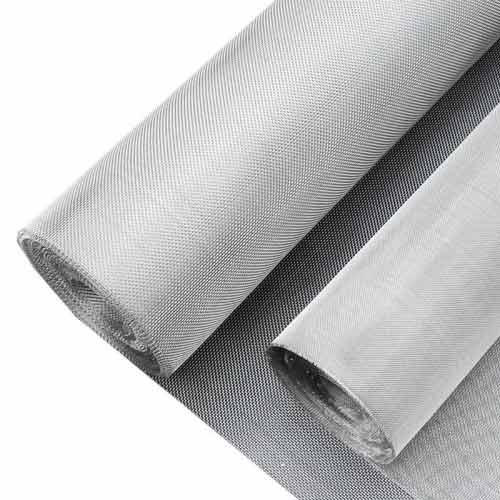
Stainless steel mesh is a versatile material used in filtration, screening,
reinforcement, and architectural applications, prized for its strength,
corrosion resistance, and precision. Its manufacturing process transforms raw
alloy into a finely woven or welded network through stages of material
preparation, weaving/welding, and finishing.
It begins with material selection and preparation. Manufacturers choose
alloys such as 304, 316, or 317 stainless steel, balancing corrosion resistance
with mechanical properties. Wire rod is drawn through progressively smaller dies
to achieve the required diameter, improving tensile strength and surface finish.
Cleaning processes remove scale and lubricants, ensuring uniformity before
weaving or welding.
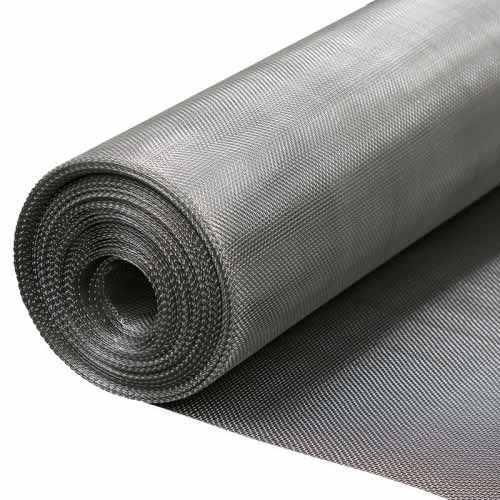
Weaving produces woven mesh, typically on automated looms. Warp and weft
wires are interlaced at precise angles—plain weave for square openings, twill
weave for finer filtration, and Dutch weave for high-density particle retention.
Tension control during weaving ensures consistent opening sizes and prevents
skewing. For architectural mesh, larger-diameter wires are woven to create
rigid, decorative panels.
Welding creates welded mesh, where intersecting longitudinal and transverse
wires are resistance-welded at contact points. This method yields high strength
and exact spacing, ideal for concrete reinforcement and machine guarding.
Robotic welding systems guarantee repeatability, with computer-controlled
pressure and current producing uniform welds without weakening the wire.
Finishing processes enhance performance and appearance. Heat treatment
relieves stresses from drawing and welding, stabilizing dimensions. Passivation
removes free iron from the surface, restoring the passive chromium oxide layer
that confers corrosion resistance. Brushing or electropolishing creates smooth,
reflective surfaces for architectural or food-processing applications.
Quality control is integral throughout. Dimensional checks verify wire
diameter, opening size, and sheet flatness. Tensile and corrosion tests confirm
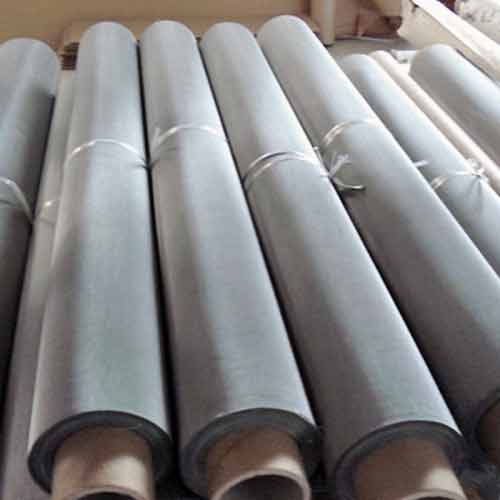
mechanical and chemical properties. Coil or sheet mesh is packaged to prevent
damage during transit. By mastering metallurgy, mechanics, and precision
engineering, manufacturers produce stainless steel mesh that meets exacting
industrial and design standards.
Previous article:
Stainless Steel Mesh vs. Aluminum Mesh: A Durability and Cost Comparison
Next article:
Stainless Steel Mesh in Food Processing