Product details description
Stainless steel mesh, available in both welded and woven configurations,
offers distinct mechanical properties suited to different industrial,
architectural, and filtration applications. Welded mesh consists of intersecting
wires fused together at each junction point using resistance welding, creating a
rigid, uniform grid with precise aperture sizes and consistent tensile strength
across all directions. This construction excels in structural support roles such
as guardrails, machine guards, or animal enclosures where dimensional stability
and impact resistance are paramount. The lack of interlacing allows for higher
load-bearing capacity per unit area compared to woven alternatives.
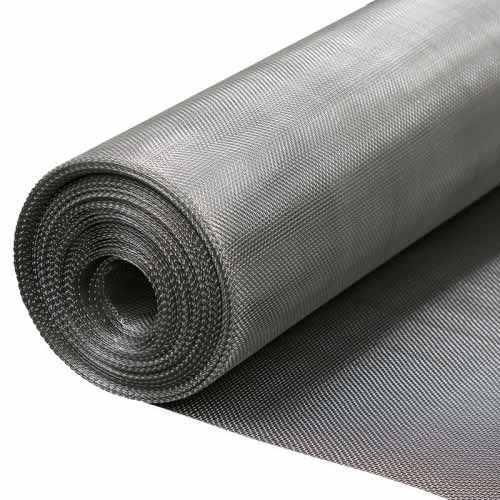
In contrast, woven stainless steel mesh features wires interlaced in an
over-and-under pattern similar to textile weaving, resulting in greater
flexibility, drapeability, and conformability to curved surfaces. While
generally less rigid than welded mesh, woven variants exhibit superior fatigue
resistance under cyclic loading and better vibration damping characteristics.
They are preferred for fine filtration, sieving, decorative facades, and
acoustic panels where aesthetic appeal, airflow regulation, or particle
retention is more critical than pure structural integrity. The crimping process
applied to some woven meshes further enhances rigidity without compromising
flexibility.
Strength comparison reveals that welded mesh typically outperforms woven
mesh in terms of ultimate tensile strength and compressive load capacity due to
its solid fusion points. However, woven mesh demonstrates higher elongation
before failure and better energy absorption under dynamic stresses, making it
suitable for shock-absorbing barriers or vibration isolation platforms. When
selecting between the two, engineers must consider not only static load
requirements but also environmental exposure, maintenance access, and lifecycle
cost. For example, in marine environments, both types benefit from grade 316
stainless steel’s corrosion resistance, but welded mesh may require fewer
inspections due to its simpler geometry and reduced risk of debris
entrapment.
Application-specific selection criteria often dictate the optimal choice.
Welded mesh dominates in heavy-duty screening, safety fencing, and architectural
cladding where precision and durability are key. Woven mesh finds favor in
pharmaceutical sieves, food-grade filters, and artistic installations requiring
intricate patterns or soft contours. Hybrid designs combining welded frames with
woven infill panels offer tailored performance for complex projects. Ultimately,
understanding the trade-offs between rigidity, flexibility, strength, and
manufacturability ensures the right stainless steel mesh solution is deployed
for maximum efficiency and longevity.
Previous article:
Stainless Steel Mesh in Food Processing
Next article:
The Cost-Effectiveness of Stainless Steel Mesh