Product details description
Choosing between stainless steel and aluminum mesh involves balancing
factors of strength, corrosion resistance, weight, and budget. Both materials
serve as effective screening and filtration media but excel in different
environments due to their inherent material properties.
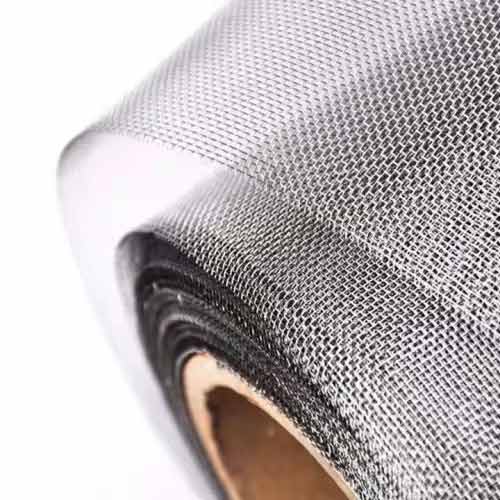
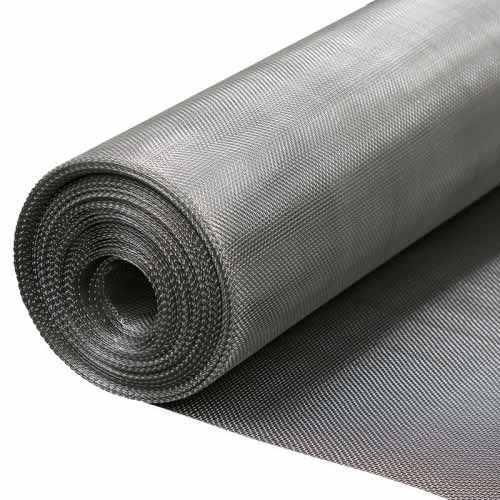
Stainless steel mesh, particularly grades 304 or 316, is the benchmark for
durability and corrosion resistance. It offers high tensile strength, excellent
resistance to rust, oxidation, and a wide range of chemicals, especially in
marine or industrial atmospheres. Grade 316, with molybdenum added, provides
superior pitting resistance against chlorides. This makes stainless steel ideal
for demanding applications: heavy-duty security screens, industrial filters,
marine barriers, and architectural fa?ades in coastal areas. Its strength allows
for finer wires and tighter weaves without sacrificing structural integrity.
However, this durability comes at a higher initial material cost and greater
weight.
Aluminum mesh is prized for its light weight, natural corrosion resistance,
and lower cost. It forms a protective oxide layer when exposed to air, which
prevents further oxidation, making it suitable for outdoor use in non-coastal,
non-industrial environments (e.g., garden fencing, insect screens, decorative
panels). It is easy to cut, form, and install. The primary drawback is its lower
tensile strength and susceptibility to mechanical damage; it can dent, stretch,
or tear more easily than stainless steel. It is also less suitable for
high-temperature applications and can suffer from galvanic corrosion if in
direct contact with dissimilar metals in a corrosive electrolyte.
The cost comparison is straightforward: aluminum mesh is significantly less
expensive per square foot than stainless steel. For large-area projects or
applications where ultimate strength is not critical, aluminum offers
substantial savings. However, the total cost of ownership must be considered.
Stainless steel's exceptional longevity and minimal maintenance in harsh
environments often make it more cost-effective over decades, despite the higher
upfront investment. Aluminum may require earlier replacement or more frequent
maintenance if exposed to harsh conditions.
Application dictates choice: Use stainless steel mesh for high-security,
high-corrosion, high-temperature, or high-wear applications where long-term
performance is paramount. Use aluminum mesh for light-duty screening, decorative
applications, situations where weight is a major concern (e.g., vehicle mesh),
or in benign environments where its natural oxide layer provides sufficient
protection at a lower budget.
Previous article:
Versatile Filtration with Stainless Steel Mesh Screen
Next article:
Stainless Steel Mesh Manufacturing Process