Product details description
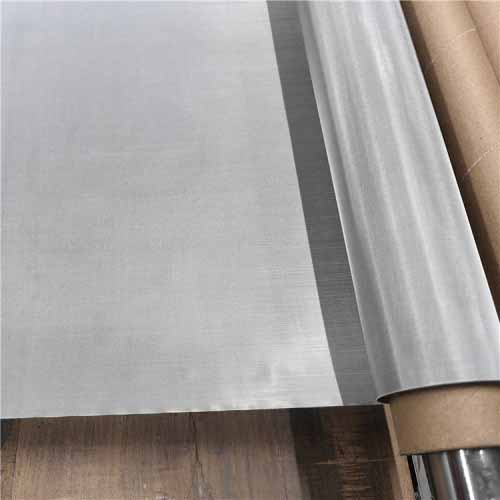
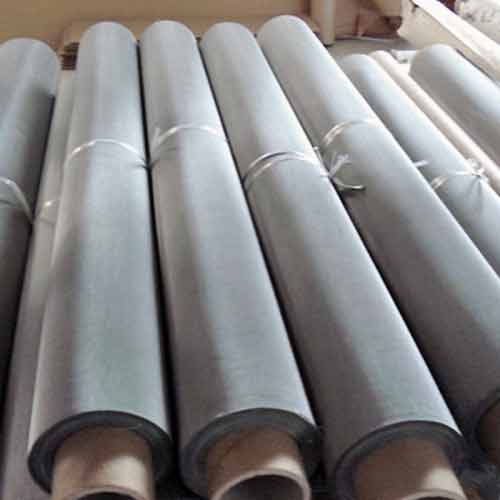
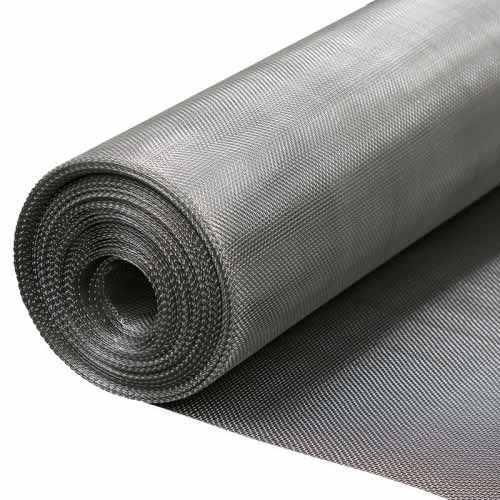
Industrial filtration stainless steel mesh stands as a cornerstone
technology in modern manufacturing and processing industries, providing reliable
particle separation, fluid clarification, and contamination control across
countless applications. The unique combination of corrosion resistance,
mechanical strength, and thermal stability makes stainless steel the material of
choice for filtration environments that would rapidly degrade lesser materials.
From chemical processing plants requiring precise particle size separation to
food and beverage operations demanding sanitary filtration standards, stainless
steel mesh filters deliver consistent performance under conditions that range
from mildly acidic to highly alkaline, and from cryogenic temperatures to
elevated heat levels encountered in molten metal filtration. The versatility of
stainless steel mesh extends to its availability in various weave patterns,
including plain Dutch, twill, and reverse Dutch constructions, each offering
distinct filtration characteristics suited to specific operational
requirements.
The technical specifications of industrial filtration stainless steel mesh
encompass a comprehensive range of parameters that determine filtration
efficiency and operational suitability. Mesh count, which indicates the number
of openings per linear inch, directly correlates with the particle size that can
be reliably captured or allowed to pass through the filter medium. The wire
diameter employed in mesh construction affects both mechanical strength and open
area percentage, creating trade-offs between flow capacity and particle
retention capability. Stainless steel grades commonly used for filtration
applications include Type 304, which offers excellent corrosion resistance for
general industrial environments, and Type 316, which provides enhanced
resistance to chlorides and酸性环境 making it suitable for marine and coastal
installations as well as chemical processing applications involving halogenated
compounds. Surface finishes ranging from bright annealed to electropolished
conditions further influence the cleanability and contamination resistance of
the filtration medium.
The manufacturing and customization of stainless steel mesh filtration
systems involves sophisticated processes that transform raw wire materials into
precision filtration components capable of meeting exacting industry standards.
Weaving techniques have evolved from traditional mechanical looms to modern
computer-controlled precision equipment that ensures consistent mesh geometry
and eliminates the variability associated with manual production methods.
Quality assurance protocols include dimensional verification, burst strength
testing, and microscopic examination of weave integrity to ensure that each
filtration element meets specified performance criteria. Custom filtration
solutions may incorporate edge treatments such as mechanical crimping, metal
edge rings, or synthetic fusion bonding to facilitate installation and ensure
secure sealing within filter housings. Advanced manufacturing capabilities also
enable the production of multi-layer filtration assemblies that combine
different mesh specifications to achieve coarse-fine filtration sequences within
single filter elements.
The ongoing evolution of industrial filtration stainless steel mesh
technology reflects broader industry trends toward improved efficiency,
sustainability, and smart monitoring capabilities. The development of sintered
mesh materials, where multiple layers are permanently bonded through
high-temperature fusion, has created filtration media with exceptional
structural integrity and consistent pore structure that resists media migration
and downstream contamination. Nano-coating technologies applied to stainless
steel mesh surfaces are emerging to provide antimicrobial properties and
enhanced hydrophobic or oleophobic characteristics for specialized separation
applications. Integration of sensor technologies into filtration systems enables
real-time monitoring of flow rates, differential pressure, and filter loading
status, supporting predictive maintenance strategies that optimize filter
replacement timing and prevent unplanned production interruptions. As industries
continue to tighten environmental regulations and seek to minimize resource
consumption, the durability and reusability of stainless steel mesh filtration
solutions positions them as environmentally responsible choices for particle and
fluid contamination management.
Previous article:
5 Industrial Uses of Stainless Steel Mesh: From Filtration to Safety Barriers
Next article:
Woven Stainless Steel Wire Mesh - Precise Filtration & Screening