Product details description
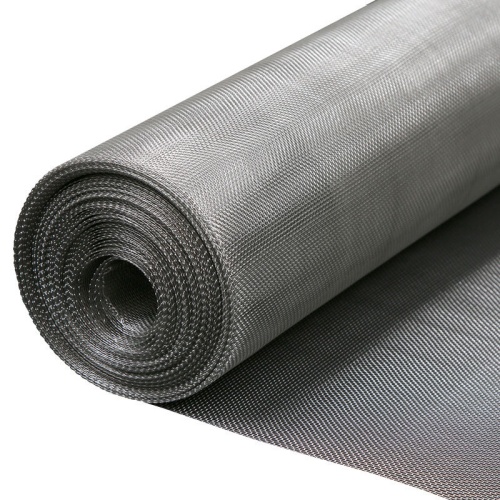
Stainless steel mesh is prized for its combination of strength, corrosion
resistance, and temperature resilience, making it indispensable in
high-temperature applications across industries. Its ability to maintain
structural integrity and performance under elevated thermal conditions stems
from the alloy composition and protective oxide layer that forms on its surface.
Understanding temperature resistance is essential for selecting the right mesh
for furnaces, exhaust systems, and industrial filters.
Different stainless steel grades exhibit varying thermal stability.
Austenitic grades such as 304 and 316 offer excellent high-temperature
performance up to approximately 870°C (1598°F) for intermittent service and
around 815°C (1499°F) for continuous use, due to their high chromium and nickel
content. Ferritic and martensitic grades have lower temperature ceilings but can
be advantageous where moderate heat and cost factors are priorities.
Heat-resistant alloys such as 310S or Inconel-reinforced meshes extend service
ranges beyond 1000°C for extreme environments.
Thermal cycling tests simulate real-world temperature fluctuations,
revealing how mesh behaves during repeated heating and cooling phases. Quality
assessments examine for distortion, loss of tensile strength, and degradation of
the passive oxide layer that guards against corrosion. In high-temperature
filtration, preserving mesh aperture size and wire integrity ensures consistent
particle capture and prevents failure due to thermal softening or grain
growth.
Oxidation resistance is a key metric linked to temperature endurance. The
chromium-rich oxide film self-repairs in the presence of oxygen, but prolonged
exposure above threshold temperatures can cause spalling and eventual loss of
corrosion protection. In applications like kiln curtains or boiler baffles,
choosing the correct grade and mesh architecture minimizes oxidation hotspots
and extends service life. Protective coatings may also be applied to enhance
performance in particularly aggressive thermal zones.
By matching stainless steel mesh grade and construction to the thermal
demands of the application, engineers ensure reliable operation and safety.
Proper selection reduces unplanned downtime, maintenance costs, and the risk of
catastrophic failure in high-temperature systems, affirming stainless steel mesh
as a robust solution for thermal stability challenges.
Previous article:
Stainless Steel Wire Mesh for Coffee Tea
Next article:
Using Stainless Steel Mesh for Automotive Grilles and Filters