Filtering and Protecting with Versatile Stainless Steel Mesh 304
Release time:2026-02-10 Click:12
In applications demanding a combination of strength, corrosion resistance, and precise filtration, stainless steel mesh 304 stands as the industry benchmark. This woven or welded mesh is crafted from an austenitic stainless steel alloy containing 18% chromium and 8% nickel, giving it excellent resistance to a wide range of chemicals, atmospheric conditions, and high temperatures. Its versatility makes it indispensable across food processing, pharmaceutical, architectural, and industrial sectors.
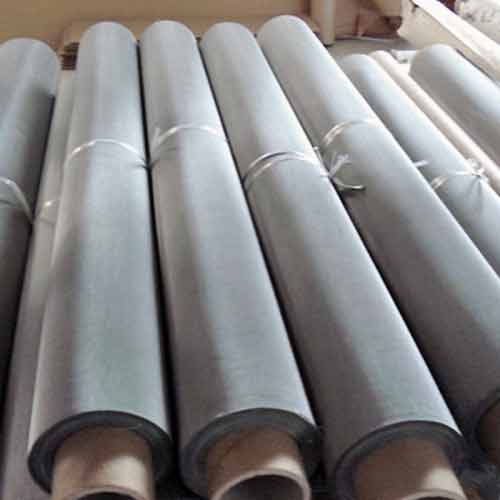
The performance of stainless steel mesh 304 is defined by its weave pattern, wire diameter, and mesh count (openings per inch). A plain square weave is common for filtration and screening, while a twilled Dutch weave provides finer filtration and higher strength for given wire dimensions. The material can be supplied in rolls, sheets, or fabricated into custom baskets, filters, and guards. Its non-reactive nature ensures it does not taint products, making it ideal for food-grade applications.
In industrial filtration, this mesh is used to strain solids from liquids and gases in chemical processing, water treatment, and oil and gas operations. Its ability to withstand repeated cleaning—whether by backwashing, ultrasonic methods, or chemical soak—without degrading is a key advantage. In architectural design, it is used for sunscreens, decorative infill panels, and balustrades, offering durability alongside a modern, sleek aesthetic that requires minimal maintenance.
For safety and protection, stainless steel mesh 304 is formed into machine guards that contain debris while allowing visibility and airflow. It is also used in insect screens for commercial buildings and as a reinforcement material in composites. Its high-temperature tolerance makes it suitable for spark arrestors and heat shields in automotive and aerospace applications, where it must maintain integrity under thermal stress.
Fabrication with this material requires techniques that preserve its corrosion resistance. Cutting should be done with methods that minimize heat input, such as water jet cutting or fine-tooth saws, to prevent altering the metallurgy at the edge. Welding should be performed with 308L filler rod to match the base material and prevent chromium carbide precipitation, which can lead to weld decay. Proper post-fabrication cleaning (passivation) is recommended to restore the protective oxide layer.
Selecting stainless steel mesh 304 is a decision for longevity and reliability in challenging environments. Its initial cost is offset by its long service life and minimal maintenance requirements. By carefully specifying the mesh parameters for the specific duty—be it filtering micron-sized particles or providing a vandal-resistant screen—engineers and designers secure a durable, hygienic, and high-performance component that consistently meets stringent operational standards.
Previous article:Security and Design Applications of Stainless Steel Expanded Mesh
Next article:Calibrated for Critical Applications: Precision-Woven Stainless Steel Mesh
Hot products
Mobile: +86 13292822131
Email:metalproducts2023@163.com
Email:634049339@qq.com